By Marcus Mok
Youth Apologetics in Singapore_Rational Argumentation
Wednesday, January 20, 2010


Tuesday, December 29, 2009
Why On Earth Are We Here For?
Below is my assignment on "The Search For Meaning in Life", teasing out the relevance of Ecclesiastes in Asian society
“What is the point of living if everything ends in death? Why on earth we are here for?” These perennial questions about the purpose of life are often raised by most sensitive and reflective people around the world. But our socio-cultural context, in different degrees, influences how we answer that question. Many overseas Chinese like my friend (let’s call him “Meng”) are descendants of immigrants who had risked the sea, worked hard and lived frugally to strive for a better future. Like many diaspora Chinese who live in urban centers, Meng inherited his ancestors’ spirit of diligence and resilience. Wealth accumulation and education for his children (so that they in turn could have better opportunities to make a living) become top priorities since these factors provide a measure of security when he can hardly depend on anyone else for support.
 If religion is often a projection of human needs/fears as Freud suggested, then perhaps we can interpret the motivation behind his cultural beliefs like consulting feng shui consultants before setting up a business, the Ching Ming practice of burning paper money for the deceased or the Chinese New Year tradition of welcoming the god of prosperity. It may be observed that the functional god in his life is Money. The pursuit of wealth and the dream of striking a lottery jackpot provide his meaning for existing, sense of security and significance. “Seize the day (Carpe Diem)!” is his life slogan. He would say, “Since we will all ultimately end up in the grave, let’s live with gusto, work hard and play hard and squeeze all the fun and excitement out of the ride”.
The psychologist Viktor Frankl suggested that the will to fulfill a meaning in life is the primary motivational force in humanity. Those who lack a meaning worth living for and find an inner void within their hearts experience ‘existential vacuum’. This is a widespread phenomenon in a rampantly industrializing economy where traditional values are lost. Existential vacuum manifests itself in boredom, addiction (i.e. workaholic, alcoholic or substance abuse), despair, the will to money, apathy or unbridled sexual libido. That could be an apt description of many city dwellers like Meng. What relevance would Qoheleth, the writer of the biblical book of Ecclesiastes, have for people like him?
 I think Qoheleth would present an unpleasant challenge to those whose pursuits focus on earthly goals that we find ‘under the sun’. All these toils, projects and pleasure are ultimately transient, impermanent and ultimately profitless. Although wisdom, wealth and backpacking in exotic places have temporal benefits, we do not take any gain in life with us when we die. We come into this world alone and empty-handed, so shall we leave it. In the long run, there is no net gain. There is “a time to be born and a time to die” (3:2). “We all come to the end of our lives as naked and empty-handed as on the day we were born. We can’t take our riches with us” (5:15). It is like chasing after the wind. Vanity of vanities! Not only do we face the certainty of death, we also face the uncertainties of life. No one knows what would happen to his hard-earned wealth even in this lifetime since injustice (3:16) or bad investment (5:14) could overtake us anytime. The Chinese proverb “Wealth does not pass three generations” has often been proven correct with nepotism, poor management and power struggles occurring in Chinese family enterprises. Who can tell if his successor will not squander his wealth (2:18-23)? While all human needs (i.e. food, shelter, clothes) can be satisfied, human greed for money is inherently insatiable. When we try to fill up the vacuum in our hearts with material things, we end up consuming more with ever-decreasing joy with each additional purchase (5:10-11).
 But Meng may wonder, “Why should my worldly ambitions be profitless if it gives me a sense of worth and security? And why must life be eternal in order for it to be meaningful?” Atheist philosopher Thomas Nagel would probably agree that human life viewed as a whole is absurd apart from God but insist that we could still find life subjectively meaningful as long as we don’t wonder if it fits into some larger purpose. Entertaining such thoughts is a sign of taking ourselves too seriously. Existentialists like Sartre would probably urge us to create a self-customized meaning and define our own essence from our bare existence. Without God, there is no objective, cosmic meaning in life. But it also makes all sorts of subjective meanings possible.
Some may even argue that an infinite life would be meaningless because we will get tired of it eventually. Consider Karl Popper who said, “There are those who think that life is valueless because it comes to an end. They fail to see that the opposite argument might also be proposed: that if there were no end to life, life would have no value; that it is, in part, the ever-present danger of losing it which helps bring home to us the value of life.” Life is perceived to be worthwhile and significant only because mortality awaits us, bringing a sense of poignant urgency to our transitory lives. Albert Camus’ solution to the urgent question of “Why live and not commit suicide?” is basically a call to stoically face the tension of absurdity.
However, there remains a gnawing sense of dissatisfaction for most people in conceding that our lives are not connected to something bigger than ourselves. The significance of a movie snapshot depends on how it contributed to the conclusion of the whole story (of which the captured moment is a part). Only when we see that connection would we conclude the meaning of that picture as part of a comedy or a tragedy. Unless we know how the story ends, we do not know its significance or meaning. This existential vacuum becomes more acute when we consider the gross injustices that were committed and appeared unpunished in the lifetime of their perpetrators. Qoheleth rightly observed that “even in the courts of law, the very place where righteousness and justice are supposed to be guaranteed, wickedness may be present” (3:16). In this moral context, the demand for a cosmic meaning in life is not motivated not so much by hubris but by justice. The philosopher Immanuel Kant saw that ethics are practically meaningless without God and the afterlife. If death is an abyss of nothingness, then the victims who suffered for a righteous cause under oppressive regimes have ultimately faced a meaningless death. In contrast, Qoheleth offers the alternative of a solid confidence that God will “judge every deed under the sun, whether good or bad, hidden or not” (12:14).
Ethics and significance in life make sense only when we presuppose God.
For most people, there is an existential dissatisfaction with accepting that at the bottom of our lives, there is no purpose, no evil and no good, nothing but blind pitiless indifference. But the moment we look up and see if life as a whole makes sense, the question of ultimate meaning comes back to haunt us. No wonder we desperately seek escapism from confronting this horrible abyss of nothingness by drowning ourselves with subjective meanings like work, relationships, leisure and power. This ‘coping mechanism’ needs to be maintained diligently because God had “put eternity in their heart, yet so that man will not find out what God does from beginning to the end” (3:12). There is an internal God-given preoccupation (3:10) whereby human beings are able to transcend the present moment and survey the past and think of the future. Yet they were not able to find out or change what God had determined, and so, their sense of vanity is aggravated. For God so works that men should fear Him (3:14).
William Lane Craig put it like this: “If each individual person passes out of existence when he dies, then what ultimate meaning can be given to his life? Does it really matter whether he ever existed at all? It might be said that his life was important because it influenced others or affected the course of history. But this only shows a relative significance to his life, not an ultimate significance. His life may be important relative to certain other events, but what is the ultimate significance of any of those events? If all the events are meaningless, then what can be the ultimate meaning of influencing any of them? Ultimately, it makes no difference”. For Qoheleth, a transitory life is meaningful as we choose responsibly to live in the fear of God and to keep his commandments (12:13). This is a perspective on death that is not mere passive acceptance, but one which urges us to enjoy life each day that God has given as a gift (3:12-13, 22).
In 2:24-26 Qoheleth affirmed that the ability to have carefree enjoyment is “from the hand of God.” Only when we embrace the reality that life is transient would we be liberated from greed, lust and despair and turn to God as the source of our significance. Ironically, by fearing God and keeping His commandments on marital faithfulness, honest labor and wise living, we are empowered to enjoy these temporal blessings to the full while we live. Leong Tien Fock wrote, “Since we have no say over whether we could take with us what we have when we die, which can happen at any time and without prior notice, how can we say that we own the things we work for? We do not even own our very life! They are not allotted to us as such. What is allotted is only the enjoyment these things can give us while we still “own” them. To appreciate this reality we need to view this world the way a child views a child-care center full of toys. What is “allotted” to him is the enjoyment of whatever toys he gets to “own” while he is there, but he cannot take any of them with him when he leaves. It would be foolish of the child to spend the few hours he has at the center busy looking out for and gathering his favorite toys, and then guarding them, as if he could bring them home, and in the process miss the opportunity to enjoy any of them.” Instead of making temporal wealth, pleasure and wisdom our idols, we can worship the Giver and thereby, enjoy these gifts truly as we put them in the proper perspective.
Last but not least, it is true that a transient life evokes a certain poignant urgency as Popper says. For example, we appreciate our loved ones more if we know we will lose them for good one day. However, Christian theism goes beyond that to claim that such relationships and significant endeavors may not terminate in death. Would that really diminish the meaning of life? The notion that eternal life would be boring and meaningless is based on the unproven assumption that the joys of heaven would be exhaustible. But why should we assume that in order to advance a strawman argument? Christian theism actually affirms that apart from the joys of reunion with loved ones and fulfilling work that awaits us in the renewed creation, we will spend eternity in relationship with the inexhaustible God Himself.

Theologian John Piper put it this way: “God is infinite and wills to reveal himself to us for our enjoyment of his fullness forever. Yet we are finite and cannot at any time, or in any finite duration of time, comprehend the limitless, infinite fullness of God’s glory… Therefore the implication is that our union with God, in the all-satisfying experience of his glory, can never be complete, but must be increasing with intimacy and intensity forever and ever.” There will always be more of God to discover, learn and savor since finite creatures will never exhaustively know Him. Therefore, glorifying and enjoying God forever remains the meaningful purpose for humanity. From his grace, we can accept and enjoy the good gifts of His creation – be it challenging achievements, authentic relationships and beauty.
Pictures courtesy of Animal World and Stu's View and Philosophy @ Fort Hare and Ginside
“What is the point of living if everything ends in death? Why on earth we are here for?” These perennial questions about the purpose of life are often raised by most sensitive and reflective people around the world. But our socio-cultural context, in different degrees, influences how we answer that question. Many overseas Chinese like my friend (let’s call him “Meng”) are descendants of immigrants who had risked the sea, worked hard and lived frugally to strive for a better future. Like many diaspora Chinese who live in urban centers, Meng inherited his ancestors’ spirit of diligence and resilience. Wealth accumulation and education for his children (so that they in turn could have better opportunities to make a living) become top priorities since these factors provide a measure of security when he can hardly depend on anyone else for support.
 If religion is often a projection of human needs/fears as Freud suggested, then perhaps we can interpret the motivation behind his cultural beliefs like consulting feng shui consultants before setting up a business, the Ching Ming practice of burning paper money for the deceased or the Chinese New Year tradition of welcoming the god of prosperity. It may be observed that the functional god in his life is Money. The pursuit of wealth and the dream of striking a lottery jackpot provide his meaning for existing, sense of security and significance. “Seize the day (Carpe Diem)!” is his life slogan. He would say, “Since we will all ultimately end up in the grave, let’s live with gusto, work hard and play hard and squeeze all the fun and excitement out of the ride”.
 The psychologist Viktor Frankl suggested that the will to fulfill a meaning in life is the primary motivational force in humanity. Those who lack a meaning worth living for and find an inner void within their hearts experience ‘existential vacuum’. This is a widespread phenomenon in a rampantly industrializing economy where traditional values are lost. Existential vacuum manifests itself in boredom, addiction (i.e. workaholic, alcoholic or substance abuse), despair, the will to money, apathy or unbridled sexual libido. That could be an apt description of many city dwellers like Meng. What relevance would Qoheleth, the writer of the biblical book of Ecclesiastes, have for people like him?
 I think Qoheleth would present an unpleasant challenge to those whose pursuits focus on earthly goals that we find ‘under the sun’. All these toils, projects and pleasure are ultimately transient, impermanent and ultimately profitless. Although wisdom, wealth and backpacking in exotic places have temporal benefits, we do not take any gain in life with us when we die. We come into this world alone and empty-handed, so shall we leave it. In the long run, there is no net gain. There is “a time to be born and a time to die” (3:2). “We all come to the end of our lives as naked and empty-handed as on the day we were born. We can’t take our riches with us” (5:15). It is like chasing after the wind. Vanity of vanities! Not only do we face the certainty of death, we also face the uncertainties of life. No one knows what would happen to his hard-earned wealth even in this lifetime since injustice (3:16) or bad investment (5:14) could overtake us anytime. The Chinese proverb “Wealth does not pass three generations” has often been proven correct with nepotism, poor management and power struggles occurring in Chinese family enterprises. Who can tell if his successor will not squander his wealth (2:18-23)? While all human needs (i.e. food, shelter, clothes) can be satisfied, human greed for money is inherently insatiable. When we try to fill up the vacuum in our hearts with material things, we end up consuming more with ever-decreasing joy with each additional purchase (5:10-11).
 But Meng may wonder, “Why should my worldly ambitions be profitless if it gives me a sense of worth and security? And why must life be eternal in order for it to be meaningful?” Atheist philosopher Thomas Nagel would probably agree that human life viewed as a whole is absurd apart from God but insist that we could still find life subjectively meaningful as long as we don’t wonder if it fits into some larger purpose. Entertaining such thoughts is a sign of taking ourselves too seriously. Existentialists like Sartre would probably urge us to create a self-customized meaning and define our own essence from our bare existence. Without God, there is no objective, cosmic meaning in life. But it also makes all sorts of subjective meanings possible.
 Some may even argue that an infinite life would be meaningless because we will get tired of it eventually. Consider Karl Popper who said, “There are those who think that life is valueless because it comes to an end. They fail to see that the opposite argument might also be proposed: that if there were no end to life, life would have no value; that it is, in part, the ever-present danger of losing it which helps bring home to us the value of life.” Life is perceived to be worthwhile and significant only because mortality awaits us, bringing a sense of poignant urgency to our transitory lives. Albert Camus’ solution to the urgent question of “Why live and not commit suicide?” is basically a call to stoically face the tension of absurdity.
However, there remains a gnawing sense of dissatisfaction for most people in conceding that our lives are not connected to something bigger than ourselves. The significance of a movie snapshot depends on how it contributed to the conclusion of the whole story (of which the captured moment is a part). Only when we see that connection would we conclude the meaning of that picture as part of a comedy or a tragedy. Unless we know how the story ends, we do not know its significance or meaning. This existential vacuum becomes more acute when we consider the gross injustices that were committed and appeared unpunished in the lifetime of their perpetrators. Qoheleth rightly observed that “even in the courts of law, the very place where righteousness and justice are supposed to be guaranteed, wickedness may be present” (3:16). In this moral context, the demand for a cosmic meaning in life is not motivated not so much by hubris but by justice. The philosopher Immanuel Kant saw that ethics are practically meaningless without God and the afterlife. If death is an abyss of nothingness, then the victims who suffered for a righteous cause under oppressive regimes have ultimately faced a meaningless death. In contrast, Qoheleth offers the alternative of a solid confidence that God will “judge every deed under the sun, whether good or bad, hidden or not” (12:14).
Ethics and significance in life make sense only when we presuppose God.
For most people, there is an existential dissatisfaction with accepting that at the bottom of our lives, there is no purpose, no evil and no good, nothing but blind pitiless indifference. But the moment we look up and see if life as a whole makes sense, the question of ultimate meaning comes back to haunt us. No wonder we desperately seek escapism from confronting this horrible abyss of nothingness by drowning ourselves with subjective meanings like work, relationships, leisure and power. This ‘coping mechanism’ needs to be maintained diligently because God had “put eternity in their heart, yet so that man will not find out what God does from beginning to the end” (3:12). There is an internal God-given preoccupation (3:10) whereby human beings are able to transcend the present moment and survey the past and think of the future. Yet they were not able to find out or change what God had determined, and so, their sense of vanity is aggravated. For God so works that men should fear Him (3:14).
William Lane Craig put it like this: “If each individual person passes out of existence when he dies, then what ultimate meaning can be given to his life? Does it really matter whether he ever existed at all? It might be said that his life was important because it influenced others or affected the course of history. But this only shows a relative significance to his life, not an ultimate significance. His life may be important relative to certain other events, but what is the ultimate significance of any of those events? If all the events are meaningless, then what can be the ultimate meaning of influencing any of them? Ultimately, it makes no difference”. For Qoheleth, a transitory life is meaningful as we choose responsibly to live in the fear of God and to keep his commandments (12:13). This is a perspective on death that is not mere passive acceptance, but one which urges us to enjoy life each day that God has given as a gift (3:12-13, 22).
In 2:24-26 Qoheleth affirmed that the ability to have carefree enjoyment is “from the hand of God.” Only when we embrace the reality that life is transient would we be liberated from greed, lust and despair and turn to God as the source of our significance. Ironically, by fearing God and keeping His commandments on marital faithfulness, honest labor and wise living, we are empowered to enjoy these temporal blessings to the full while we live. Leong Tien Fock wrote, “Since we have no say over whether we could take with us what we have when we die, which can happen at any time and without prior notice, how can we say that we own the things we work for? We do not even own our very life! They are not allotted to us as such. What is allotted is only the enjoyment these things can give us while we still “own” them. To appreciate this reality we need to view this world the way a child views a child-care center full of toys. What is “allotted” to him is the enjoyment of whatever toys he gets to “own” while he is there, but he cannot take any of them with him when he leaves. It would be foolish of the child to spend the few hours he has at the center busy looking out for and gathering his favorite toys, and then guarding them, as if he could bring them home, and in the process miss the opportunity to enjoy any of them.” Instead of making temporal wealth, pleasure and wisdom our idols, we can worship the Giver and thereby, enjoy these gifts truly as we put them in the proper perspective.
Last but not least, it is true that a transient life evokes a certain poignant urgency as Popper says. For example, we appreciate our loved ones more if we know we will lose them for good one day. However, Christian theism goes beyond that to claim that such relationships and significant endeavors may not terminate in death. Would that really diminish the meaning of life? The notion that eternal life would be boring and meaningless is based on the unproven assumption that the joys of heaven would be exhaustible. But why should we assume that in order to advance a strawman argument? Christian theism actually affirms that apart from the joys of reunion with loved ones and fulfilling work that awaits us in the renewed creation, we will spend eternity in relationship with the inexhaustible God Himself.

Theologian John Piper put it this way: “God is infinite and wills to reveal himself to us for our enjoyment of his fullness forever. Yet we are finite and cannot at any time, or in any finite duration of time, comprehend the limitless, infinite fullness of God’s glory… Therefore the implication is that our union with God, in the all-satisfying experience of his glory, can never be complete, but must be increasing with intimacy and intensity forever and ever.” There will always be more of God to discover, learn and savor since finite creatures will never exhaustively know Him. Therefore, glorifying and enjoying God forever remains the meaningful purpose for humanity. From his grace, we can accept and enjoy the good gifts of His creation – be it challenging achievements, authentic relationships and beauty.
Pictures courtesy of Animal World and Stu's View and Philosophy @ Fort Hare and Ginside
Monday, December 28, 2009
Bribery And Corruption in Asia
Bribery and Corruption Dear friends,
We are pleased to announce that we have an upcoming release, Bribery and Corruption: Biblical Reflections and Case Studies for the Marketplace in Asia by Hwa Yung, Bishop for the Methodist churches in Malaysia. More details about the book and how to order copies can be found in the attached pre-order flyer.
The book is due to be released in February 2010 and we are open for orders now.
For enquiries, you may contact Ms Bernice Lee at bernice@graceworks.com.sg.
Graceworks Private Limited
Promoting Spiritual Friendship In Church and Society
Website: www.graceworks.com.sg
Tel No.: 6464 6080
Fax No.: 6464 7040
We are pleased to announce that we have an upcoming release, Bribery and Corruption: Biblical Reflections and Case Studies for the Marketplace in Asia by Hwa Yung, Bishop for the Methodist churches in Malaysia. More details about the book and how to order copies can be found in the attached pre-order flyer.
The book is due to be released in February 2010 and we are open for orders now.
For enquiries, you may contact Ms Bernice Lee at bernice@graceworks.com.sg.
Graceworks Private Limited
Promoting Spiritual Friendship In Church and Society
Website: www.graceworks.com.sg
Tel No.: 6464 6080
Fax No.: 6464 7040
Sunday, December 13, 2009
Book Review: Man's Search For Meaning by Viktor Frankl

Questions about life’s meaning and suffering which were formerly handled by priests or rabbis are now increasingly confronted by psychiatrists and doctors. In his bestseller Man's Search for Meaning, Dr Victor Frankl highlighted the distinctive of logotherapy, also known as the “Third Viennese School of Psychotherapy”, as the idea that “the striving to find a meaning in one's life is the primary motivational force in man”. Therefore, for logotheraphy, the focus is on the will to meaning in contrast to the will to pleasure of Freudian psychoanalysis and the will to power stressed by Adlerian psychology. While Freud and Adler tried to discover primal drives latent in the past, Frankl focuses rather on the meanings one is called to fulfill in the future. In his moving autobiographical account of experiences in a Nazi concentration camp, he observed how prisoners who lost hope in the future would be subject to mental and physical decay.
According to Frankl, man’s search for meaning is not a derived projection from more basic instinctual drives or sublimations. Otherwise it would lose its ability to challenge or summon him to live or even die for these values. Unlike Sartre’s axiom that existence precedes essence, Frankl’s existentialism asserts that the meaning of our existence is not invented by ourselves but rather we discover it as ‘something confronting existence’. Those who lack a meaning worth living for and find an inner void within their hearts experience ‘existential vacuum’. This is a widespread phenomenon of the twentieth century due to the loss of traditional values and rampant industrialization, manifesting itself in boredom, addiction, the will to money, apathy or unbridled sexual libido.
As a Christian, I applaud Frankl’s critique of the determinism prevailing in much of psychoanalysis that reduced man to nothing but a victim of hereditary or environmental conditions. We share the hope that a ‘rehumanized psychiatry’ would replace the tendency to treat human minds as machines and focus on mere techniques. Indeed, Frankl’s view of man is biblical in the sense that man has both the potentials of behaving like a swine or a saint. Man’s dignity lies in him being created in the image of God and yet marred by the depravity of sin. However, Frankl has an overly optimistic view of human freedom in which even the most evil persons are ultimately self-determining. Through restricted by conditions, they are free to change their own destiny. In the Christian perspective, fallen man is in need of divine rescue and inner liberation before such a change is possible. As long as his basic orientation is self-centered, the outward change merely vacillates between hedonism and legalism. ‘Existential vacuum’ (and its symptoms) express in modern terms Augustine’s ancient prayer that our hearts are restless until they find fulfillment or satisfaction in God.
Read on for the rest of the article
Thursday, December 10, 2009
Meaning Of Life (Ecclesiastes)
 The major hermeneutical difficulty of Ecclesiastes is to understand its apparent internal contradictions. At times, Qoheleth seemed to be pessimistic or gloomy about everything in life (“All is vanity!”) while at other times, he admonished readers to enjoy their labor, eat well, live joyfully with one’s wife and receive with gladness what God has given. As a result, interpreters have conflicting descriptions of Qoheleth as a skeptic (R. B. Y. Scott) or an orthodox theist (Aalders, Leupold). Others have tried to resolve the tension by spiritualizing exegesis (Jewish Targum and medieval Christians), positing a dialogue between two differing speakers (Yeard, Eichhorn) or by presenting the futility of the world for evangelistic purposes so that readers will pursue the delights of heaven (the Puritans, Wesley). Eaton took issue with interpreters (Barton, McNeile and Podechard) who saw Ecclesiates as a basically skeptical work with glossatorial additions at the hands of orthodox editor(s) as it would entail a clumsy redactor who added conflicting comments to 'skeptical' passages in the same book. He could have more easily amended these passages altogether. But there is no textual support for such changes, the vocabulary of alleged insertions is remarkably similar to undisputed passages and no methodological necessity exists for such theories if an alternative exposition could reconcile these sections coherently.
 Michael Eaton attempted an approach that avoids the pitfalls of critical orthodoxy which downplayed the orthodox elements within Ecclesiastes and traditional orthodoxy which at times has ignored or allegorized its pessimism. “What, then, is the purpose of Ecclesiastes? It is an essay in apologetics. It defends the life of faith in a generous God by pointing to the grimness of the alternative.” He saw a heaven-earth dichotomy in which ‘God is in heaven and you upon earth’ (5:2). The recurring expressions like ‘under the sun’, ‘under heaven’ and ‘on earth’ described the futility of a barren life without reference to faith in God. Therefore, much of the book was blanketed by pessimism. When such terminologies fade away (2:24-26; 11:1-12:14), a more positive tone emerges with references to the ‘hand of God’ (2:24), the joy of man (2:25, 3:12. 5:18, 20, 9:7, 11:7-9), and the generosity of God (2:26, 3:13, 5:19). Qoheleth showed the inevitable bankruptcy of ‘secularism’ in order to drive us to God where life’s meaning can be fulfilled. “It is only to one seeking satisfaction in disregard of God that the Preacher’s message stops at ‘All is vanity’… When a perspective of faith is introduced ‘All is vanity’ is still true, but it is not the whole picture; ‘under the sun’ it is the whole truth.”
But what does the phrase ‘under the sun’ mean? Read on for the whole article
Saturday, November 28, 2009
The Reason For Our Hope
Audio Sermon on 1 Peter 3:13-16 Giving The Reason For Our Hope can be downloaded here. We need to communicate the gospel clearly, lovingly and compellingly by being thoughtful, informed, honest and humble ambassadors for Christ. We embody the gospel with our lives and declare the gospel with our words. We need to show the world a community worth seeing and a faith worth thinking about.


Giving a Reason for Our Faith
Giving a Reason for Our Faith
Tuesday, November 10, 2009
The Selfish Gene
Listen carefully the next time you overheard an argument in office or at home. For you may just stumble upon a powerful clue for God’s existence!
In his bestseller Mere Christianity, C.S. Lewis observed that when we quarrel, we would often appeal to some higher Moral Law to which the other party is accountable. For example, it is common to hear people argue like this: “That’s my seat, I was here first”, “Give me a piece of your orange, I gave you some of mine” or “How do you like it if someone did the same to you?” Such arguments do not merely express our displeasure at someone’s behavior. They are actually appealing to a standard of right and wrong which we expect others to know about and ought to follow. Otherwise it would be as futile as claiming that a footballer had committed a foul without some agreement about the rules. This transcendent and universal Moral Law is a signpost pointing to God who is the Lawgiver.
But not everyone would agree. Popular writers such as Richard Dawkins and Robert Wright have tried to show that rudimentary forms of moral cognition can be found in animals as well. Here is a discussion on whether natural selection can account for morality as we know it available in the latest edition of Kairos Magazine.
The Selfish Gene: Monkeying With Morality
In his bestseller Mere Christianity, C.S. Lewis observed that when we quarrel, we would often appeal to some higher Moral Law to which the other party is accountable. For example, it is common to hear people argue like this: “That’s my seat, I was here first”, “Give me a piece of your orange, I gave you some of mine” or “How do you like it if someone did the same to you?” Such arguments do not merely express our displeasure at someone’s behavior. They are actually appealing to a standard of right and wrong which we expect others to know about and ought to follow. Otherwise it would be as futile as claiming that a footballer had committed a foul without some agreement about the rules. This transcendent and universal Moral Law is a signpost pointing to God who is the Lawgiver.
But not everyone would agree. Popular writers such as Richard Dawkins and Robert Wright have tried to show that rudimentary forms of moral cognition can be found in animals as well. Here is a discussion on whether natural selection can account for morality as we know it available in the latest edition of Kairos Magazine.
The Selfish Gene: Monkeying With Morality
Monday, November 09, 2009
Book Review: Our Idea of God (T. V. Morris)
Many Christians have only a faint idea of what God is like. However, knowledge about God is too important to be reserved for experts only. It is crucial to a proper relationship with God and the world. But how do we start? Thomas V. Morris wrote “Our Idea Of God: An Introduction to Philosophical Theology” to provide non-specialists with an accessible introduction to philosophical theology.
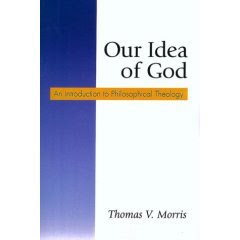 There are different ways of doing theology or rational discourse about God. For example, systematic theology seeks to integrate diverse biblical teachings on a given topic (i.e. God’s power) into a coherent whole. In this book, the focus is to explore a concept of God that is both biblically faithful and rationally plausible. It seeks to do so by exploring theological concepts, presuppositions and their inter-related connections through primarily the methods and tools of philosophical reflections and observations about the universe. The present review would briefly survey how the author has approached the subject and evaluate the degree in which he has achieved his objective.
Morris started Chapter 1 as a defense for the possibility that finite beings like us could have a rational discourse about God. Basically, he sought to demonstrate as logically self-defeating the skeptics’ assertions that no human concepts or language could apply to the infinite God. How could one ‘know’ that God is utterly unknowable? However, the mere possibility of thinking and talking reasonably about God does not mean we can find sure ground for confidence. In Chapter 2, the author discussed the method of how we could go about doing it. At this stage, he proposed a methodology attributed to Anselm called ‘perfect being theology’ which I would elaborate on later. Subsequently, he put this method to the test in discussing major theistic concepts like God’s goodness, power, knowledge, being, eternity and creation. In the final chapter, he sought to vindicate the particularly Christian doctrines of Trinity and Incarnation as logically possible without watering down any of the mentioned divine attributes.
The discussion on methodology is the most crucial part of his thesis that deserves further discussion. Firstly, Morris rejected the approach to develop a concept of God from every claimant to divine revelation because it offers no measuring standard for conflicting truth claims. Secondly, he explored the approach of a purely biblical theology. However, the Bible is not a philosophical theology textbook. We may ask legitimate questions for constructing a comprehensive worldview that is compatible with biblical portrayal yet not strictly confined by what it already said. Thirdly, based on the biblical portrait of God as creator, we may also do ‘creational theology’ by inferring a First Cause whose nature would be sufficient to explain the existence of the universe. However, this approach would not tell us much about God’s character or how much power is required to do so . Finally, Morris proposed the procedure called perfect being theology. Following Saint Anselm, God is described as ‘that which no greater can be conceived’ or the Being with the greatest possible combination of intrinsically good properties.
Some immediate questions that arise would be “What is greater? Is He bigger? Is power intrinsically good?” Morris explained that we would consult our ‘value intuitions’ about what these great-making properties are. Here, he is not referring to some mystical subjectivism but naturally formed belief, ‘whose acceptance does not derive entirely from linguistic convention, evidence, testimony, memory, inference or sense experience’ . For example, we intuitively know that it is wrong to torture babies for fun and that 2+2 = 4. These beliefs should be considered ‘innocent until proven unreliable’. By consulting our intuitions, could we not arrive at the concept of God as ‘a thoroughly benevolent conscious agent with unlimited knowledge and power who is the necessarily existent, ontologically independent creative source of all else’ ?
Although I have some disagreements with the favorable review on Molinism, the methodology itself to be generally helpful to vindicate, augment and develop rationally what biblical revelation has unveiled . The treatments on God’s attributes were enlightening to gain a clearer picture on, for example, what we could conceive of omnipotence. Omnipotence doesn’t mean that God could actualize contradictions inconsistent with His own nature. The author has succeeded in showing that rational discourse about God is possible and fruitful in refining such ideas. I would suggest that the last chapter on “God Incarnate and Triune” would have immense apologetic value in dialogue with Muslim neighbors in Malaysian context. At least, it would help to remove some obstacles for those who believe that these doctrines are logically impossible.
However, I wonder if the perfect being method could even get off the ground if we start by consulting value intuitions. To his credit, Morris recognized that intuitions have defeasible epistemic status. An open theist friend would mistakenly feel that the ‘ability to be surprised’ is a great-making property a relational God should have which would necessarily limit His exhaustive foreknowledge. Could not another person who felt femininity as ‘intrinsically good’ employ the method to construct a goddess instead? If not by revelation, how would we ever be able to intuitively develop a concept of Trinity or Incarnation by proceeding from perfect being theology? Gerald Bray also made this caution, “To conceive of relative greatness is to assume that the scale is open-ended; it will always be possible to conceive of something greater than the maximum” . Although Morris does recognize that perfect being theology could be corrected, complimented and augmented by creational or biblical theology, it seems that we need to be more explicit in incorporating biblical theology as its starting point and controlling presupposition.
In summary, the author has been meticulous to argue for his method and applied it in a way that restated the basic contours of classical theism in a way that is sensitive to how these concepts interact with each other. He offered many helpful illustrations to make the abstract ideas more comprehensible to the target audience. Alternative views were fairly presented and evaluated in a concise and incisive manner. I believe that this book would benefit those who would seek to complement devotional fervor with rigorous reflections about our understanding of God and His attributes.
 There are different ways of doing theology or rational discourse about God. For example, systematic theology seeks to integrate diverse biblical teachings on a given topic (i.e. God’s power) into a coherent whole. In this book, the focus is to explore a concept of God that is both biblically faithful and rationally plausible. It seeks to do so by exploring theological concepts, presuppositions and their inter-related connections through primarily the methods and tools of philosophical reflections and observations about the universe. The present review would briefly survey how the author has approached the subject and evaluate the degree in which he has achieved his objective.
 Morris started Chapter 1 as a defense for the possibility that finite beings like us could have a rational discourse about God. Basically, he sought to demonstrate as logically self-defeating the skeptics’ assertions that no human concepts or language could apply to the infinite God. How could one ‘know’ that God is utterly unknowable? However, the mere possibility of thinking and talking reasonably about God does not mean we can find sure ground for confidence. In Chapter 2, the author discussed the method of how we could go about doing it. At this stage, he proposed a methodology attributed to Anselm called ‘perfect being theology’ which I would elaborate on later. Subsequently, he put this method to the test in discussing major theistic concepts like God’s goodness, power, knowledge, being, eternity and creation. In the final chapter, he sought to vindicate the particularly Christian doctrines of Trinity and Incarnation as logically possible without watering down any of the mentioned divine attributes.
The discussion on methodology is the most crucial part of his thesis that deserves further discussion. Firstly, Morris rejected the approach to develop a concept of God from every claimant to divine revelation because it offers no measuring standard for conflicting truth claims. Secondly, he explored the approach of a purely biblical theology. However, the Bible is not a philosophical theology textbook. We may ask legitimate questions for constructing a comprehensive worldview that is compatible with biblical portrayal yet not strictly confined by what it already said. Thirdly, based on the biblical portrait of God as creator, we may also do ‘creational theology’ by inferring a First Cause whose nature would be sufficient to explain the existence of the universe. However, this approach would not tell us much about God’s character or how much power is required to do so . Finally, Morris proposed the procedure called perfect being theology. Following Saint Anselm, God is described as ‘that which no greater can be conceived’ or the Being with the greatest possible combination of intrinsically good properties.
Some immediate questions that arise would be “What is greater? Is He bigger? Is power intrinsically good?” Morris explained that we would consult our ‘value intuitions’ about what these great-making properties are. Here, he is not referring to some mystical subjectivism but naturally formed belief, ‘whose acceptance does not derive entirely from linguistic convention, evidence, testimony, memory, inference or sense experience’ . For example, we intuitively know that it is wrong to torture babies for fun and that 2+2 = 4. These beliefs should be considered ‘innocent until proven unreliable’. By consulting our intuitions, could we not arrive at the concept of God as ‘a thoroughly benevolent conscious agent with unlimited knowledge and power who is the necessarily existent, ontologically independent creative source of all else’ ?
Although I have some disagreements with the favorable review on Molinism, the methodology itself to be generally helpful to vindicate, augment and develop rationally what biblical revelation has unveiled . The treatments on God’s attributes were enlightening to gain a clearer picture on, for example, what we could conceive of omnipotence. Omnipotence doesn’t mean that God could actualize contradictions inconsistent with His own nature. The author has succeeded in showing that rational discourse about God is possible and fruitful in refining such ideas. I would suggest that the last chapter on “God Incarnate and Triune” would have immense apologetic value in dialogue with Muslim neighbors in Malaysian context. At least, it would help to remove some obstacles for those who believe that these doctrines are logically impossible.
However, I wonder if the perfect being method could even get off the ground if we start by consulting value intuitions. To his credit, Morris recognized that intuitions have defeasible epistemic status. An open theist friend would mistakenly feel that the ‘ability to be surprised’ is a great-making property a relational God should have which would necessarily limit His exhaustive foreknowledge. Could not another person who felt femininity as ‘intrinsically good’ employ the method to construct a goddess instead? If not by revelation, how would we ever be able to intuitively develop a concept of Trinity or Incarnation by proceeding from perfect being theology? Gerald Bray also made this caution, “To conceive of relative greatness is to assume that the scale is open-ended; it will always be possible to conceive of something greater than the maximum” . Although Morris does recognize that perfect being theology could be corrected, complimented and augmented by creational or biblical theology, it seems that we need to be more explicit in incorporating biblical theology as its starting point and controlling presupposition.
In summary, the author has been meticulous to argue for his method and applied it in a way that restated the basic contours of classical theism in a way that is sensitive to how these concepts interact with each other. He offered many helpful illustrations to make the abstract ideas more comprehensible to the target audience. Alternative views were fairly presented and evaluated in a concise and incisive manner. I believe that this book would benefit those who would seek to complement devotional fervor with rigorous reflections about our understanding of God and His attributes.
Friday, November 06, 2009
Every Story Whispers His Name
The Bible is not a book of rules, nor a book of heroes. There's only one Hero.
 “The Bible is most of all a Story… It's like the most wonderful of fairy tales that has come true in real life! You see, the best thing about this Story is--it's true! There are lots of stories in the Bible, but all the stories are telling one Big Story. The Story of how God loves his children and comes to rescue them.”
This is Christ-centered hermeneutics so simply and elegantly framed in a children storybook written by Sally Lloyd Jones and beautifully illustrated by the award winning Jago. Having browsed through a friend's copy available at Canaanland.com.my, I intend to buy one for my son too.
Here is a review from Tim Keller:
”Sally has captured the plot line of redemption in a children’s story Bible that sings the praise of Jesus and his saving grace on every page, in every story... To discover The Jesus Storybook Bible is to have a unique resource for communicating the gospel to children in all it’s fullness.”
Click here for a sampler
In many Sunday School lessons, biblical stories are used as moral lessons for children. "Be like Abraham, he obeys God". "Be brave like King David, he challenged Goliath". "Be strong like Samson, he wrestled with lions."
But what do we make of the parts where Abraham allow Sarah to be taken to save his own skin? Or David's famous murder of Uriah? Or Samson's downfall courtesy of Delilah?
It seems that the biblical stories took care to tell us (with brutal honesty) something not-so-clever or downright mean that these people have done. The point is not simply that they are heroes to be emulated. But they are also needy, fallen and sinful people that God loves and repeatedly saves. The overarching story is a story of grace and God is the hero who comes to the rescue. It's the gospel hidden everywhere in the entire Bible.
 “The Bible is most of all a Story… It's like the most wonderful of fairy tales that has come true in real life! You see, the best thing about this Story is--it's true! There are lots of stories in the Bible, but all the stories are telling one Big Story. The Story of how God loves his children and comes to rescue them.”
This is Christ-centered hermeneutics so simply and elegantly framed in a children storybook written by Sally Lloyd Jones and beautifully illustrated by the award winning Jago. Having browsed through a friend's copy available at Canaanland.com.my, I intend to buy one for my son too.
Here is a review from Tim Keller:
”Sally has captured the plot line of redemption in a children’s story Bible that sings the praise of Jesus and his saving grace on every page, in every story... To discover The Jesus Storybook Bible is to have a unique resource for communicating the gospel to children in all it’s fullness.”
Click here for a sampler
In many Sunday School lessons, biblical stories are used as moral lessons for children. "Be like Abraham, he obeys God". "Be brave like King David, he challenged Goliath". "Be strong like Samson, he wrestled with lions."
But what do we make of the parts where Abraham allow Sarah to be taken to save his own skin? Or David's famous murder of Uriah? Or Samson's downfall courtesy of Delilah?
It seems that the biblical stories took care to tell us (with brutal honesty) something not-so-clever or downright mean that these people have done. The point is not simply that they are heroes to be emulated. But they are also needy, fallen and sinful people that God loves and repeatedly saves. The overarching story is a story of grace and God is the hero who comes to the rescue. It's the gospel hidden everywhere in the entire Bible.
Tuesday, November 03, 2009
THE REAL JESUS CHRIST OF HISTORY
KAIROS PUBLIC FORUM: Jesus of The Bible versus Jesus of the Documentaries (National Geographic/Discovery /BBC)
Date: Friday, 20 November 2009
Time: 8.30pm – 10.30pm
Venue: Hall 1, Dream Centre
2 Jalan 13/1, Seksyen 13
46200 Petaling Jaya
Selangor, Malaysia
Influential networks like National Geographic, Discovery and BBC Channels are propagating new portraits (or fabrications) of Jesus that distort if not contradict what Christians traditionally believe about Jesus for 2000 years.
 This Kairos Public Forum seeks to explain why these TV producers rely on pagan Mystery Religions and 2nd century Gnosticism texts to reconstruct new portraits Jesus, what methods and assumptions inform the scholars who advise these media channels for their distorted views of Jesus. The Forum also offers evidence for the integrity of the New Testament Gospels as reliable historical records of Jesus’ life and ministry and critiques popular images of Christ in contemporary society.
Topics/Speakers
1) The Fabricated Jesus of Contemporary TV Documentaries
Speaker: Mr. Philip Koh
(Partner of a legal firm in Kuala Lumpur and Director of Kairos Research Centre)
2) The Historical Christ of the New Testament: The Test of History
Speaker: Dr. Ng Kam Weng
(Research Director of Kairos Research Centre)
3) The Real Jesus Christ and Contextual Christs Today: Who makes the real difference?
Speaker: Rev. Dr. Tan Jin Huat
(Anglican minister and CTEE Director, Seminari Theoloji Malaysia)
Kairos Seminar on Jesus Christ and Early Christianity
There will be a follow-up seminar for those who want to learn in detail how contemporary research supports the historical accuracy and authenticity of the New Testament portrait of Jesus Christ.
Speaker: Dr. Ng Kam Weng
Date: Saturday 5 December 2009
Time: 9.30pm – 12.00 noon
Place: Dream Centre
To participate in this seminar contact Kairos office (Tel no: 7726 5420 or email: kairosmalaysia@gmail.com)
Kairos Research Centre sends you early wishes for a very Blessed Christmas!
DC: Portrait of Jesus by Rembrandt
Date: Friday, 20 November 2009
Time: 8.30pm – 10.30pm
Venue: Hall 1, Dream Centre
2 Jalan 13/1, Seksyen 13
46200 Petaling Jaya
Selangor, Malaysia
Influential networks like National Geographic, Discovery and BBC Channels are propagating new portraits (or fabrications) of Jesus that distort if not contradict what Christians traditionally believe about Jesus for 2000 years.
 This Kairos Public Forum seeks to explain why these TV producers rely on pagan Mystery Religions and 2nd century Gnosticism texts to reconstruct new portraits Jesus, what methods and assumptions inform the scholars who advise these media channels for their distorted views of Jesus. The Forum also offers evidence for the integrity of the New Testament Gospels as reliable historical records of Jesus’ life and ministry and critiques popular images of Christ in contemporary society.
Topics/Speakers
1) The Fabricated Jesus of Contemporary TV Documentaries
Speaker: Mr. Philip Koh
(Partner of a legal firm in Kuala Lumpur and Director of Kairos Research Centre)
2) The Historical Christ of the New Testament: The Test of History
Speaker: Dr. Ng Kam Weng
(Research Director of Kairos Research Centre)
3) The Real Jesus Christ and Contextual Christs Today: Who makes the real difference?
Speaker: Rev. Dr. Tan Jin Huat
(Anglican minister and CTEE Director, Seminari Theoloji Malaysia)
Kairos Seminar on Jesus Christ and Early Christianity
There will be a follow-up seminar for those who want to learn in detail how contemporary research supports the historical accuracy and authenticity of the New Testament portrait of Jesus Christ.
Speaker: Dr. Ng Kam Weng
Date: Saturday 5 December 2009
Time: 9.30pm – 12.00 noon
Place: Dream Centre
To participate in this seminar contact Kairos office (Tel no: 7726 5420 or email: kairosmalaysia@gmail.com)
Kairos Research Centre sends you early wishes for a very Blessed Christmas!
DC: Portrait of Jesus by Rembrandt
Saturday, October 31, 2009
Reformation Day 2009
In conjunction with Reformation Day (Oct 31), I have just completed a 5 series introduction to Reformed Theology sharing to a Chinese speaking church planting team in Subang Jaya. We tried to explore how the history of Reformation (5 solas'), the emphasis on cultural mandate, the sovereignty of God and the doctrines of grace have implications in planting a church in and for the Malaysian city.
Much of the notes are taken from resources on the Internet especially by Matt Perman. I came across his articles long before he became the Desiring God ministry website anchor person and he is very lucid and helpful in almost everything he wrote - always pastoral and clearly, well-thought-out. Here are the notes I have compiled for the group:
An Introduction to Reformed Theology
Much of the notes are taken from resources on the Internet especially by Matt Perman. I came across his articles long before he became the Desiring God ministry website anchor person and he is very lucid and helpful in almost everything he wrote - always pastoral and clearly, well-thought-out. Here are the notes I have compiled for the group:
An Introduction to Reformed Theology
Saturday, October 24, 2009


Saturday, October 10, 2009
Living by Faith In Future Grace – John Piper
As part of our initiative to encourage a reading habit and developing a Christian mind in the church, we are looking for volunteers to do book reviews. Here is a start
By Davin Wong
 The full title of the book is “The Purifying Power of Living by Faith in Future Grace”. The reason becomes clearer in the introduction: “the aim of this book is to emancipate human hearts from servitude to the fleeting pleasures of sin. Sin is what you do when your heart is not satisfied with God. No one sins out of duty. We sin because it holds out some promise of happiness. That promise enslaves us until we believe that God is more to be desired than life itself (Psalm 63:3)”
His ultimate purpose: That God be prized above all things and the praise of the glory of God’s grace. According to him, prizing is the authenticating essence of praising. You can’t praise what you don’t prize. Therefore, God is most glorified in us when we are most satisfied in Him!
The author believes that behind most wrong living is wrong thinking. We nullify the words of Jesus because our conceptual framework is disfigured. Some of the inherited ways of “Christian” thinking are so out of sync with the Bible that they work against the very obedience they are designed to promote. One of such ‘wrong thinking’ is what he calls the Debtor’s ethic (Chapter 1). This is arguably most relevant for us Asians. The debtor’s ethic says, “Because you have done something good for me, I feel indebted to do something good for you.” This impulse is not what gratitude was designed to produce. God meant gratitude to be a spontaneous expression of pleasure in the gift and the good will of another. He did not mean it to be an impulse to return favours. If gratitude is twisted into a sense of debt, it gives birth to the debtor’s ethic – and the effect is to nullify grace!
Here Piper is quick to qualify his statement. Make no mistake, I exalt gratitude as a central biblical response of the heart to the grace of God. The Bible commands gratitude to God as one of out highest duties…(Psalm 100:4). God says that gratitude honours him…(Psalm 50:23). In spite of being misused in the debtor’s ethic, gratitude is not guilty. He goes on by relating debtor’s ethic to our relationship with God and how we should repent of this mindset by embracing a different approach in our relationship with God.
The book is spread over 31 chapters with the intent that the reader would spend some time each day reading a chapter for a month (hopefully, in unrushed reflection!) It also shows how living by faith in future grace is the way to prevail over the deceptive promises of sin in 8 areas of human struggle with evil – anxiety, pride, misplaced shame, impatience, covetousness, bitterness, despondency and lust.
Finally, I echo John Piper’s words that it is where we end that matters. His prayer is that for every reader of his book will hear and follow the call to find their joy in all that God promises to be for them in Jesus. That the expulsive power of this new affection will go on freeing them from the fleeting pleasures of sin and empower them for a life of sacrificial love. This too is my prayer both for my self and for those of you who will read this book.
By Davin Wong
 The full title of the book is “The Purifying Power of Living by Faith in Future Grace”. The reason becomes clearer in the introduction: “the aim of this book is to emancipate human hearts from servitude to the fleeting pleasures of sin. Sin is what you do when your heart is not satisfied with God. No one sins out of duty. We sin because it holds out some promise of happiness. That promise enslaves us until we believe that God is more to be desired than life itself (Psalm 63:3)”
His ultimate purpose: That God be prized above all things and the praise of the glory of God’s grace. According to him, prizing is the authenticating essence of praising. You can’t praise what you don’t prize. Therefore, God is most glorified in us when we are most satisfied in Him!
The author believes that behind most wrong living is wrong thinking. We nullify the words of Jesus because our conceptual framework is disfigured. Some of the inherited ways of “Christian” thinking are so out of sync with the Bible that they work against the very obedience they are designed to promote. One of such ‘wrong thinking’ is what he calls the Debtor’s ethic (Chapter 1). This is arguably most relevant for us Asians. The debtor’s ethic says, “Because you have done something good for me, I feel indebted to do something good for you.” This impulse is not what gratitude was designed to produce. God meant gratitude to be a spontaneous expression of pleasure in the gift and the good will of another. He did not mean it to be an impulse to return favours. If gratitude is twisted into a sense of debt, it gives birth to the debtor’s ethic – and the effect is to nullify grace!
Here Piper is quick to qualify his statement. Make no mistake, I exalt gratitude as a central biblical response of the heart to the grace of God. The Bible commands gratitude to God as one of out highest duties…(Psalm 100:4). God says that gratitude honours him…(Psalm 50:23). In spite of being misused in the debtor’s ethic, gratitude is not guilty. He goes on by relating debtor’s ethic to our relationship with God and how we should repent of this mindset by embracing a different approach in our relationship with God.
The book is spread over 31 chapters with the intent that the reader would spend some time each day reading a chapter for a month (hopefully, in unrushed reflection!) It also shows how living by faith in future grace is the way to prevail over the deceptive promises of sin in 8 areas of human struggle with evil – anxiety, pride, misplaced shame, impatience, covetousness, bitterness, despondency and lust.
Finally, I echo John Piper’s words that it is where we end that matters. His prayer is that for every reader of his book will hear and follow the call to find their joy in all that God promises to be for them in Jesus. That the expulsive power of this new affection will go on freeing them from the fleeting pleasures of sin and empower them for a life of sacrificial love. This too is my prayer both for my self and for those of you who will read this book.
Tuesday, September 29, 2009
Joshua 6: Siege Of Jericho, Rescue of Rahab
Joshua 6 - Siege of Jericho, Rescue of Rahab
The conquest of Canaan took place within the larger inter-textual setting of God’s covenantal commitment to bless Abraham and through his descendants, make him a blessing to all nations on earth. The redemptive purpose of God would weave through the nation of Israel and its land to ultimately embrace all nations and the whole renewed creation. Having been liberated from Egyptian oppression, the theocratic state of Israel would now be established in the land once promised to the patriarch. Therefore, the book of Joshua stood as a fulfillment of covenantal promise to Abraham and Moses regarding the possession of the land (Genesis 12:7; Deuteronomy 1:6-8). It also set the stage for the rest of redemptive history including the establishment of Davidic dynasty, Babylonian exile, eventual restoration and the coming of the Messiah. Read on for the rest of exegetical paper and sermon
The conquest of Canaan took place within the larger inter-textual setting of God’s covenantal commitment to bless Abraham and through his descendants, make him a blessing to all nations on earth. The redemptive purpose of God would weave through the nation of Israel and its land to ultimately embrace all nations and the whole renewed creation. Having been liberated from Egyptian oppression, the theocratic state of Israel would now be established in the land once promised to the patriarch. Therefore, the book of Joshua stood as a fulfillment of covenantal promise to Abraham and Moses regarding the possession of the land (Genesis 12:7; Deuteronomy 1:6-8). It also set the stage for the rest of redemptive history including the establishment of Davidic dynasty, Babylonian exile, eventual restoration and the coming of the Messiah. Read on for the rest of exegetical paper and sermon
Thursday, September 17, 2009
New Perspective On Paul
Credo500 has released my work in progress paper on the New Perspective On Paul, interacting with Stendahl, Sanders and Wright here with a review from Ps Lu Tsun En. Do check it out and leave your comments and feedback.
Here is an excerpt:
In summary, there are crucial insights to be gleaned from the New Perspective. Sanders put us all in his debt by refuting a simplistic portrait of Judaism and Dunn brought to our attention much-neglected sociological aspects of Pauline theology. N.T. Wright’s ongoing project on the centrality of the Kingship of Christ in the gospel poses a much needed correction to the popular concept of Christianity as an individualistic, otherworldly religious experience. I have come away breathless and challenged by the clarity and incisive insights with which Wright unpacked Paul’s proclamation as a rhetoric against pagan worldviews and political oppression.
 However, if we are to understand the Pauline doctrine of justification by faith, we would do well to heed Westerholm’s call to return and read exegetical masters like Luther once again. The great ecumenical article of faith that once held together orthodox, pre-schism traditions in the East and West needs to be rediscovered, not abandoned, if genuine unity in the gospel is to be achieved . [45] I expect to see the Church’s historic understanding of justification by faith would be significantly refined, but vindicated, in the process of the ongoing debate for the glory of God and the good of His people. The practical pay-off should therefore be nothing less than a renewed zeal and urgency to a missionary enterprise that truly transcends racial and cultural boundaries.
Here is an excerpt:
In summary, there are crucial insights to be gleaned from the New Perspective. Sanders put us all in his debt by refuting a simplistic portrait of Judaism and Dunn brought to our attention much-neglected sociological aspects of Pauline theology. N.T. Wright’s ongoing project on the centrality of the Kingship of Christ in the gospel poses a much needed correction to the popular concept of Christianity as an individualistic, otherworldly religious experience. I have come away breathless and challenged by the clarity and incisive insights with which Wright unpacked Paul’s proclamation as a rhetoric against pagan worldviews and political oppression.
 However, if we are to understand the Pauline doctrine of justification by faith, we would do well to heed Westerholm’s call to return and read exegetical masters like Luther once again. The great ecumenical article of faith that once held together orthodox, pre-schism traditions in the East and West needs to be rediscovered, not abandoned, if genuine unity in the gospel is to be achieved . [45] I expect to see the Church’s historic understanding of justification by faith would be significantly refined, but vindicated, in the process of the ongoing debate for the glory of God and the good of His people. The practical pay-off should therefore be nothing less than a renewed zeal and urgency to a missionary enterprise that truly transcends racial and cultural boundaries.
Sunday, September 13, 2009
Loving The Enemy


Download sermon on "Loving The Enemy" with discussion questions. Sermon transcripts available at TheAgora
Wednesday, September 09, 2009
Wednesday, August 26, 2009
A Christian Perspective On The Palestinian-Israeli Conflict
The global community was rudely shocked by the stark reality of jihad on 11th September 2001 when hijacked planes crashed into iconic buildings that symbolize American economic and military power. In response to the specter of religiously-inspired violence, the subsequent ‘war on terror’ would loom large over the early years of the 21st century.
 At the center of this worldwide unrest is the long-standing Palestine-Israeli conflict that continues to be a source of its political and religious impetus. Orthodox Jews honor Jerusalem as the city of peace that once housed the temple of Yahweh. Christians make pilgrimage to the Promised Land where Jesus Christ once lived, was crucified and resurrected. Muslims treasure the city as the third holiest site in Islamic history. With the establishment of the modern state of Israel in 1949, many adherents from these three major faiths have staked a claim in supporting or opposing it in the name of God or Allah.
However, the idea of ‘holy war’ is not unique to Islam. In the book of Joshua, a scriptural text embraced by both Jews and Christians, we would find the concept of Yahweh as a warrior waging battle against Canaanite deities and nations through His covenant people Israel in the conquest of the Promised Land. In some military campaigns, the Israelites were divinely decreed to utterly destroy an entire population of men, women and children (Joshua 6:18-19).
This raises difficult moral dilemma for sensitive believers as well as concerns that such warfare narratives may be used to justify violence and genocide today.
In this paper I would attempt to answer three questions: “What is Old Testament teaching and justification for ‘Yahweh war’ in the conquest of Canaan? How should Christians perceive the continuity and discontinuity of these Old Testament concepts in light of New Testament revelation of Jesus Christ? Finally, what are the resulting theological implications for how we understand the establishment of the modern state of Israel?”
Yahweh War and Modern Israel
 At the center of this worldwide unrest is the long-standing Palestine-Israeli conflict that continues to be a source of its political and religious impetus. Orthodox Jews honor Jerusalem as the city of peace that once housed the temple of Yahweh. Christians make pilgrimage to the Promised Land where Jesus Christ once lived, was crucified and resurrected. Muslims treasure the city as the third holiest site in Islamic history. With the establishment of the modern state of Israel in 1949, many adherents from these three major faiths have staked a claim in supporting or opposing it in the name of God or Allah.
 However, the idea of ‘holy war’ is not unique to Islam. In the book of Joshua, a scriptural text embraced by both Jews and Christians, we would find the concept of Yahweh as a warrior waging battle against Canaanite deities and nations through His covenant people Israel in the conquest of the Promised Land. In some military campaigns, the Israelites were divinely decreed to utterly destroy an entire population of men, women and children (Joshua 6:18-19).
This raises difficult moral dilemma for sensitive believers as well as concerns that such warfare narratives may be used to justify violence and genocide today.
In this paper I would attempt to answer three questions: “What is Old Testament teaching and justification for ‘Yahweh war’ in the conquest of Canaan? How should Christians perceive the continuity and discontinuity of these Old Testament concepts in light of New Testament revelation of Jesus Christ? Finally, what are the resulting theological implications for how we understand the establishment of the modern state of Israel?”
Yahweh War and Modern Israel
Wednesday, August 12, 2009
Chinese Calvinists Celebrate 500th Year with Weblog Conference
Saturday, Feb. 21, 2009 Posted: 2:42:19PM HKT
From The Christian Post Singapore: "In commemoration of the unprecedented 500th anniversary of Protestant reformer John Calvin this year, Chinese Reformed churches in Singapore and Malaysia are about to embark on an equally historic initiative to stir up theological discussion among Chinese Calvinists on the worldwide web.
 In what is called Chinese Reformed Evangelical Discussion Online or CREDO for short, 15 pastors and specialists of the Calvinistic branch of Protestant Christianity were invited to submit articles on Calvin�s thoughts and influences in the 16th and 17th centuries and explore their implications within Chinese churches today, according to the organisers.
�The aim of this conference is to foster theological reading habit and research discipline on reformed and puritans� heritages among Chinese theo-bloggers via the blogosphere,� stated Pastors Jonah and Lemuel.
The conference, which will run from May 4 to 8, will see essay contributions on nearly every theological field of study including biblical theology, Christian ethics, historical theology, pastoral theology and Christian culture.
During the five-day period, the dissertations will be published and comments from the online community encouraged.
Articles will cover topics including evaluating the New Perspective on Paul�s exposition of the doctrine of justification by faith alone, evaluating the Purpose Driven paradigm and recapturing the vision of the centrality of the gospel and the place and necessity of creeds and confessions in the modern church.
Contributors, who represent Baptist, Reformed, Reformed Presbyterian and Methodist denominations and various occupations ranging from church ministers and leaders to ministry leaders to apologists, include David Chong from the Agora online ministry, Daniel Chew and Pastor J J Lim and Linus Chua from Pilgrim Covenant Church in Singapore.
For more information, click here to visit the CREDO 500 website."
Edmond Chua
edmond@christianpost.com
From The Christian Post Singapore: "In commemoration of the unprecedented 500th anniversary of Protestant reformer John Calvin this year, Chinese Reformed churches in Singapore and Malaysia are about to embark on an equally historic initiative to stir up theological discussion among Chinese Calvinists on the worldwide web.
 In what is called Chinese Reformed Evangelical Discussion Online or CREDO for short, 15 pastors and specialists of the Calvinistic branch of Protestant Christianity were invited to submit articles on Calvin�s thoughts and influences in the 16th and 17th centuries and explore their implications within Chinese churches today, according to the organisers.
�The aim of this conference is to foster theological reading habit and research discipline on reformed and puritans� heritages among Chinese theo-bloggers via the blogosphere,� stated Pastors Jonah and Lemuel.
The conference, which will run from May 4 to 8, will see essay contributions on nearly every theological field of study including biblical theology, Christian ethics, historical theology, pastoral theology and Christian culture.
During the five-day period, the dissertations will be published and comments from the online community encouraged.
Articles will cover topics including evaluating the New Perspective on Paul�s exposition of the doctrine of justification by faith alone, evaluating the Purpose Driven paradigm and recapturing the vision of the centrality of the gospel and the place and necessity of creeds and confessions in the modern church.
Contributors, who represent Baptist, Reformed, Reformed Presbyterian and Methodist denominations and various occupations ranging from church ministers and leaders to ministry leaders to apologists, include David Chong from the Agora online ministry, Daniel Chew and Pastor J J Lim and Linus Chua from Pilgrim Covenant Church in Singapore.
For more information, click here to visit the CREDO 500 website."
Edmond Chua
edmond@christianpost.com
Saturday, August 08, 2009
The Beauty of the Body: Has Medicine Lost the Plot?
The Center for the Study of Christianity in Asia and Trinity Theological College's Student Council are organizing this wonderful Faith and Society Forum:

About the speaker:
Prior to his present appointment, Professor Campbell was Professor of Ethics in Medicine at the University of Bristol and Director of its Centre for Ethics in Medicine. He is a former President of the International Association of Bioethics. He has published more than 30 books and book chapters, as well as contributed many dictionary chapters in the field. His latest book is The Body in Bioethics (Routledge-Cavendish, 2009). Prof. Campbell is a member of the Bioethics Advisory Committee to the Singapore Government, of the National Medical Ethics Committee of the Ministry of Health.
Subscribe to:
Posts (Atom)

 Posts
Posts


